
Media Analyses of State Population Trends Biased to Fit Convenient Narrative?
Friday, January 24, 2020 by Zelman & Associates
Filed under: Demographics
For the year ended July 2019, the Census Bureau estimates that national population growth slowed to 0.48%, the softest since 1945, due largely to slower immigration. It is important to highlight that slowing population trends are a broad dynamic. Population growth in 2019 was weaker than the 2000-10 average in 46 states. Growth was stronger only in ID, DC, MI, ND and RI.
Not surprisingly, movement among the state winners and losers is gradual. In fact, over the last decade, 11 states outpaced the national average every year. Similarly, 18 states fell short of national growth every year. Many presume that tax reform tilted the balance of population growth to low income tax states. We do not find convincing evidence in the data.
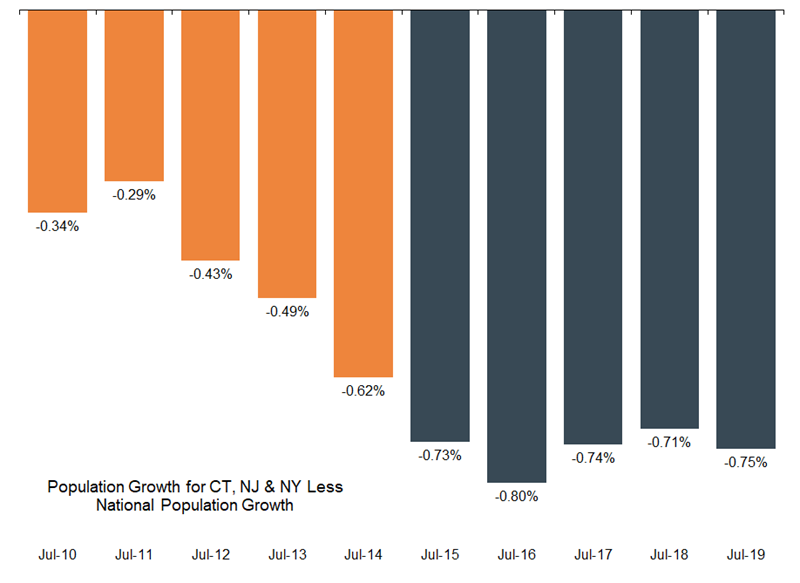
As an example, aggregate population growth in CT, NJ and NY was 75 basis points worse than the nation for the year ended July 2019, similar to a range of 71-80 basis points the prior four years. There is no question that growth in these states is meager, underperforming the national average in each of the last ten years, but it is very difficult to blame tax reform as a pivot point in relative performance.
Friday, January 24, 2020 by Zelman & Associates
Filed under: Demographics
Looking for More Insightful Content?
Explore our ResearchAffordabilityApartmentsBaby BoomersBuild-For-RentBuilding ProductsConstruction LendingConsumerDemographicsEntry-LevelExisting Home SalesHome ImprovementHome PricingHomebuildingHomeownershipHousehold FormationHousingHousing StartsInstitutional InvestorsInterest RatesM&AMacro HousingManufactured HousingMillennialsMortgageMortgage RatesNew Home SalesReal Estate ServicesRefinanceSG&ASingle-Family RentalSpeakers BureauStocksStudent DebtSupplySurvey