
Is the 2021 Baby Bump Temporary or Shift in Direction?
Thursday, February 10, 2022 by Dennis McGill
Filed under: DemographicsMillennials
This week, the CDC released preliminary birth data through 3Q21, showing a 2.8% year-over-year increase and leaving the year-to-date decline at just 0.2%. Based on normal seasonality, 4Q21 births are likely to increase 5-6% against a depressed year-ago comparison that was most affected by the initial stages of the pandemic, which would result in an estimated 1.3% increase for the entire year. It appears now that at least a portion of 2020 births was delayed to 2021 versus forgone. Consider that a 1.2% per year decline over the two years exactly matches the pre-pandemic decrease in 2019.
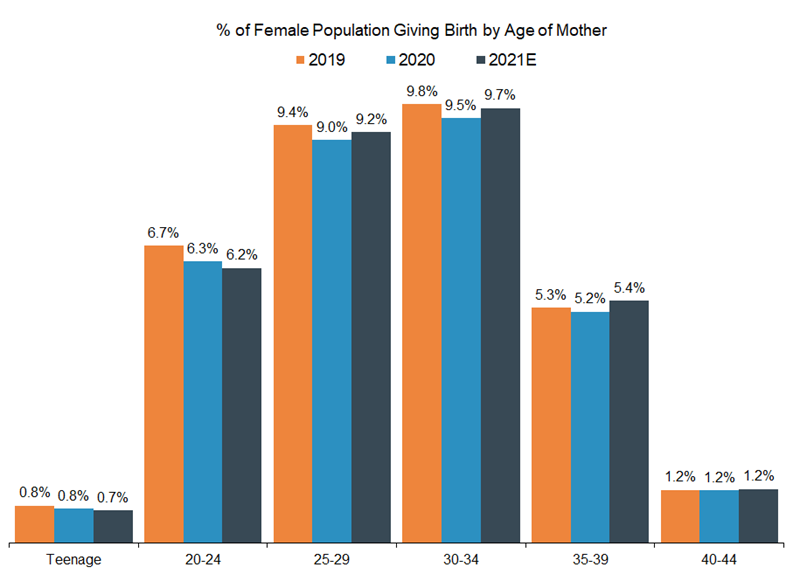
The 0.2% year-to-date decline continued to be led by teenagers, with births by that cohort dropping 6.6% as compared to a 7.6% decline in 2020. Declines also continued for 20-24 year olds (down 3.7%) and 25-29 year olds (down 1.3%); however, all major age cohorts ranging from 20-44 witnessed an improvement in the year-over-year trend, with 30-34 year olds shifting the most at 410 basis points from a 1.7% decline in 2020 to 2.4% growth through the first three quarters of 2021. The swing was also dramatic for 35-39 year olds (390 basis points) and 25-29 year olds (360 basis points).
Looking forward, we previously assumed that the COVID overhang on births would largely dissipate after 2021, modeling relatively steady births through the end of the decade, with no annual increase or decrease greater than 60 basis points, including a 0.4% predicted decline in 2022. Whether fertility rates can reverse the steep decline over the last 15 years and drive upside to our outlook will largely depend on whether the 2021 gains reflect pandemic-driven delays or a new stance among young adults on fertility. At this point, we would be guarded in extrapolating the recent gains as fertility rates will still be lower in 2021 than in 2019 for all age cohorts younger than 35.
Thursday, February 10, 2022 by Dennis McGill
Filed under: DemographicsMillennials
Looking for More Insightful Content?
Explore our ResearchAffordabilityApartmentsBaby BoomersBuild-For-RentBuilding ProductsConstruction LendingConsumerDemographicsEntry-LevelExisting Home SalesHome ImprovementHome PricingHomebuildingHomeownershipHousehold FormationHousingHousing StartsInstitutional InvestorsInterest RatesM&AMacro HousingManufactured HousingMillennialsMortgageMortgage RatesNew Home SalesReal Estate ServicesRefinanceSG&ASingle-Family RentalSpeakers BureauStocksStudent DebtSupplySurvey