
Immigration Policy Likely to be a Net Positive for Housing Under Biden
Monday, December 7, 2020 by Ivy Zelman, Dennis McGill & Alan Ratner
Filed under: DemographicsHomebuildingHomeownershipHousehold FormationMacro Housing
Based on our discussions with public policy experts, the Biden administration will likely take a somewhat softer tone with regard to immigration policy and enforcement, reversing course on threats of construction jobsite raids that were prevalent during the early stages of the Trump Presidency, as an example. In addition to more muted rhetoric, Biden may also reverse course on a recent suspension of the H-2B guest visa program, which allows employers to bring foreign workers to the U.S. to fill seasonal, low-wage, non-agricultural jobs. This program has been a key contributor to the construction work force, with more than 95,000 H-2B visas granted in 2019 – the highest total since President Bush upped the cap to 130,000 at the height of the housing boom. However, the H-2B visa program was suspended in June 2020 during the COVID-19 pandemic, and its outlook for 2021 was uncertain prior to the election.
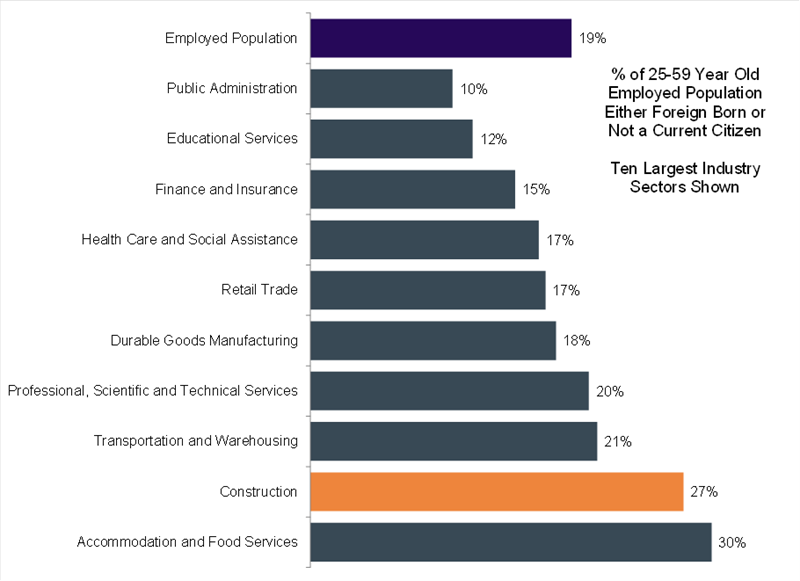
Of course, this is relevant to housing given the fact that the construction sector is disproportionately dependent upon foreign labor. Notably, an estimated 27% of 25-59 year-old construction workers were born outside the United States versus 19% across all sectors.
Finally, it is important not to dismiss the impact of immigration on housing demand as well. Over the last decade, immigration accounted for approximately 35-40% of population growth, roughly evenly split between legal immigrants and an estimate for illegal immigrants. However, this has been trending lower in recent years. According to estimates from Moody’s Economy.com, annual immigration has been approximately 500-600,000 in recent years, down from roughly one million per year prior to the Trump administration. While the pandemic may keep a lid on meaningful growth in this figure in the near term, our policy contacts expect immigration to rebound to one million by the end of 2023.
In summary, while broad-based immigration reform is unlikely absent a Democratic sweep, there are several steps that can be taken by the Biden administration under executive order that should be net positives for housing from both a supply and demand perspective over the coming years.
Monday, December 7, 2020 by Ivy Zelman, Dennis McGill & Alan Ratner
Filed under: DemographicsHomebuildingHomeownershipHousehold FormationMacro Housing
Looking for More Insightful Content?
Explore our ResearchAffordabilityApartmentsBaby BoomersBuild-For-RentBuilding ProductsConstruction LendingConsumerDemographicsEntry-LevelExisting Home SalesHome ImprovementHome PricingHomebuildingHomeownershipHousehold FormationHousingHousing StartsInstitutional InvestorsInterest RatesM&AMacro HousingManufactured HousingMillennialsMortgageMortgage RatesNew Home SalesReal Estate ServicesRefinanceSG&ASingle-Family RentalSpeakers BureauStocksStudent DebtSupplySurvey